Told it’s just stress?Chronic stress happens when a body can’t recover.Imagine your home as the place where it could.
Sleep. Screens. The desk you work at. The room you rest in. Most advice works on your symptoms.BioGeometry® works on your space.
In-home assessments across greater Portland and within 150 miles.
Now scheduling assessments.
What it does to a body
Stress that passes. Stress that stays.
Acute stress is protection. Your body revs up to handle a threat, then recovers when it’s gone.
Chronic stress is when the body never gets a chance to recover. It can result in:
Trouble falling or staying asleep
Raised blood pressure
Anxiety, low mood and trouble concentrating
Headaches and aching muscles
Digestive trouble
Weight gain around the middle
More frequent infections
Skin flare-ups
General information, not medical advice. If you have any of these symptoms, see your doctor first. Sources: Mayo Clinic, “Chronic stress puts your health at risk”; McEwen, New England Journal of Medicine, 1998.
Ok, now what?
A thousand small things. Has anyone checked the room?
Stress isn’t always one big event. Often it’s a thousand small things, each asking a little too much of your body, day after day, with no real chance to recover. That’s what makes stress chronic. It adds up.
You’ve probably worked on the ones you can see: the schedule, the screen time, the sleep-hygiene list, the melatonin, the meditation. If none of it has been enough, it may not be a personal failing. It may be that nobody has ever thought to look at the room, the one place your body is supposed to recover.
Two short quizzes
Does this resonate?
At night
You’re worn out all day, then wide awake the moment your head hits the pillow. You wake at 3am and can’t get back to sleep. Or you sleep better anywhere but home: a hotel, a friend’s place, on vacation.
Focused work feels like wading through water. Five-minute decisions take twenty. By the end of the day you feel tension in your neck and shoulders, or a mild headache.
BioGeometry® is an environmental science that works with the quality of energy in a space rather than against it. It identifies the invisible stressors in a home, such as man-made electromagnetic fields and geopathic stress zones, and how they interact.
The goal is simple: balance the energy quality of the space, so your home is a place your body can recover in. Stress will always be part of life. What we can change is how well the body recovers from it, and the room you sleep and work in is a good place to start.
The Three-Layer Read
At Spaces Within, a home assessment reads three layers: what’s beneath your house, what’s within it, and you: how your body responds. Whatever’s placed is re-measured before Bobby leaves, then checked again two to three weeks later.
Home assessments by Bobby Jones
I · BeneathFormer hydrogeologist
II · WithinLicensed BioGeometry®‑EHS Associate‑Practitioner
III · You20 years in chiropractic
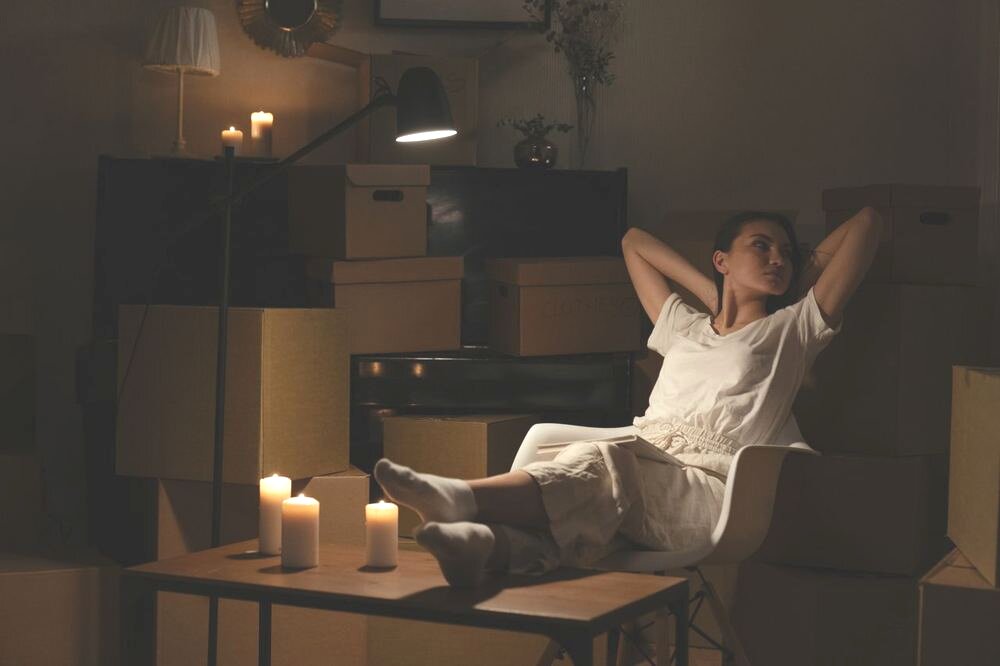
Plate I — The boxes, still waiting
One Story
The apartment she couldn’t unpack.
A woman moved into a new apartment and, a month later, still hadn’t unpacked. Not because she was busy. Something in her wouldn’t settle — she avoided her closet without knowing why, and sleep never quite arrived.
When Bobby assessed the space, he found earth gridlines crossing her bed, an electrical panel and wifi router positioned right where she slept, and a stress line running from the refrigerator straight through her bed and closet. None of it was visible. All of it showed up in the reading.
The day after the correction, she texted that she had slept through the night for the first time since moving in.
“It’s just nice to be home today. Not hampered by anxiety.”— SL, Portland
A free call, one visit, a follow-up. And what it costs.
1A free callTell Bobby what you’ve noticed about your sleep, your space, and how different rooms feel. You don’t need the right words.
2The assessmentBobby walks the space room by room and maps what’s beneath and within it.
3Solutions placedSmall clear-acrylic BioGeometry® solutions go where the reading calls for them, in the least noticeable spots. Nothing drilled, wired, or altered. No meters to buy, no shielding to install.
4Re-measuredRight after placement, to confirm the reading holds.
5The follow-upTwo to three weeks later, included in every tier.
Most people notice something within the first few days to weeks. It tends to be subtle at first. Renters never need landlord permission, since the solutions come out as easily as they go in.
RecommendedEssentialFrom $1,500
The whole home. Priced by size, number of rooms, and the electromagnetic sources found.
Introductory Consultation$500
A smaller first step: one primary space, usually the bedroom. For when the whole home isn’t in the budget yet.
Essential PLUSSet after the visit
For homes with more layers: heavier EMF environments or significant geopathic stress.
Bobby Jones traced invisible contamination through groundwater as a hydrogeologist, then spent two decades as a chiropractor watching patients improve in his office only to backslide within days of going home. He’s a licensed BioGeometry®-EHS Associate-Practitioner based in the Pacific Northwest — and long before any of that, his own body was sensitive to exactly this kind of stress.
“Keep working — I’m liking this.”— DF, Wilder, TN, during the assessment
“I slept better last night than I can remember. I felt so good, I didn’t want to get out of bed.”— JR, Calhoun, GA, the day after the assessment
“I think we both slept better — bed was easier to make. And G spent less time on the computer this morning 😀”— LM, Portland, OR, the day after the assessment
Before you book: check with your doctor first if you wake gasping for air, your heart races or pounds at night, your sleep changed when you started or stopped a medication, or it came with pregnancy, postpartum, or menopause. A home assessment looks at your space, not your health. It isn’t medical care, and it works best alongside your doctor’s.
Not sure where to start?
If you’d rather talk it through, tell me what you’re noticing, at night, at your desk, or just around the house, and we’ll work out whether the room is worth a look. No pressure, and the call is free.