Your Body Sleeps. Your Bedroom Doesn’t.
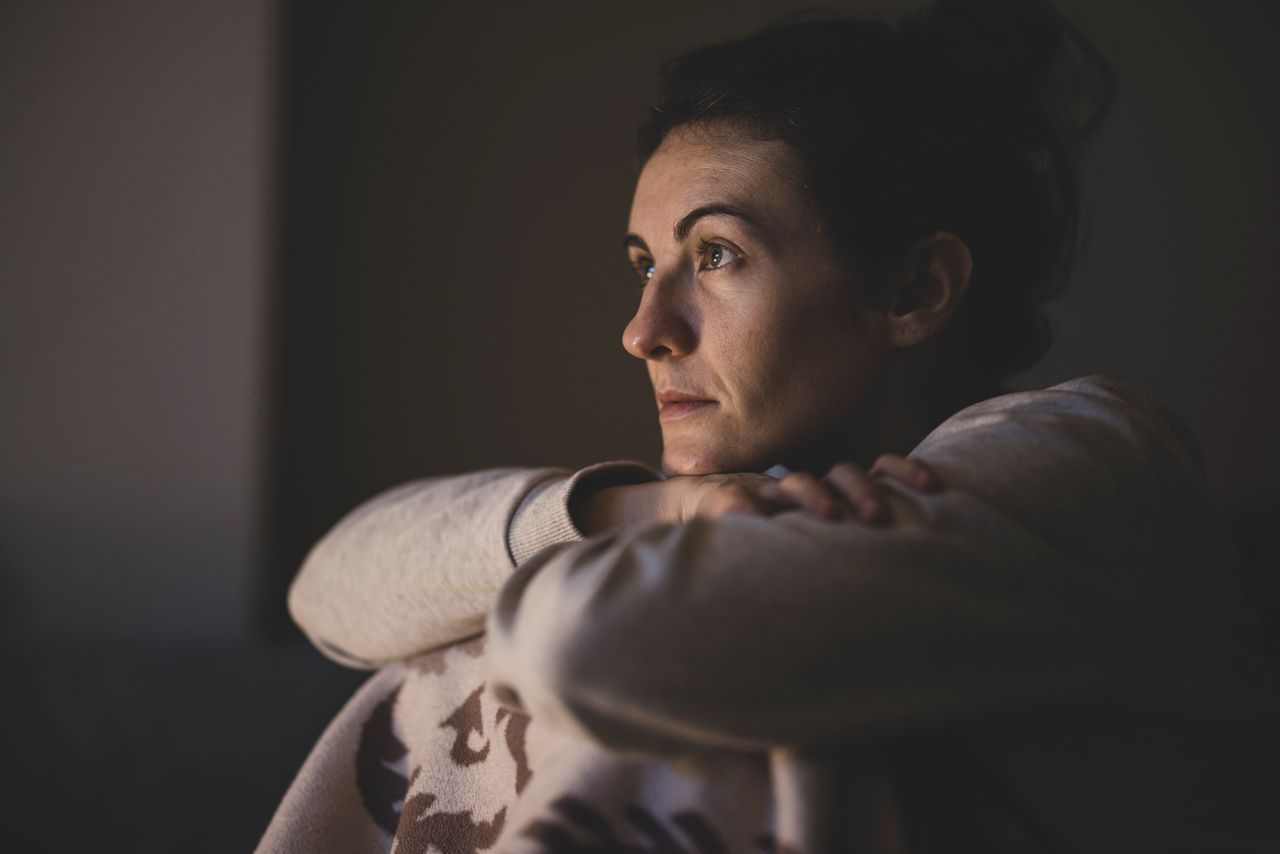
Ask people how they slept and they’ll tell you about the sleep. Too short, too light, woke up at three. Almost nobody mentions the room.
I understand why. When your eyes are closed, it feels like you’ve left the building. But the research says something different: the sleeping brain never fully stops listening. It keeps checking light, sound, temperature, and a good deal more, and it adjusts. Mostly that’s a good thing. It’s why a smoke alarm wakes you. But it also means a bedroom is not a neutral container for sleep. It’s a participant.
Here’s what the science actually shows about what disturbs that process, and how sure we can be about each piece.
Light: it doesn’t have to be bright to count
Researchers at Northwestern University had volunteers sleep for a night in either dim light (about 3 lux) or a moderately lit room (about 100 lux, nowhere near daylight). The people in the lit room showed a higher heart rate through the night, and the next morning their bodies handled blood sugar less well, a sign of early insulin resistance. The researchers described it as the sympathetic nervous system, the body’s “on” switch, staying active even though the sleepers never opened their eyes. The study was published in PNAS in 2022.1
One night, one study, a small group of volunteers. It doesn’t tell us what years of it do. But it does tell us something I think matters: your body can register light you’re completely unaware of.
Screens: the hours before bed count too
A Harvard and Brigham and Women’s team had twelve adults read on a light-emitting tablet for four hours before bed for five nights, then read printed books for five nights. After the tablet nights, people took nearly ten minutes longer to fall asleep, made less of the sleep hormone melatonin, spent less time in REM sleep, and were groggier and slower to wake up the next morning. The blue-rich light from the screen was the leading suspect.2
It was a small study, and four hours of tablet reading is a lot. But the direction is consistent with what we know about evening light and the body’s clock, and it’s why amber, low-blue light in the evening is the gentlest option.
Heat: your body needs to cool to sleep
Core body temperature drops as you head toward sleep, starting about two hours before bedtime and bottoming out in the early morning. A cool room helps that happen. A warm one fights it. According to the Sleep Foundation’s review of the research, higher core temperatures are associated with less slow-wave (deep) sleep, and excess heat appears to cut REM time too. Their suggested range for most adults is roughly 65 to 68°F, though individual comfort varies.3
This is one of the better-supported items on the list, and one of the cheapest to test.
Noise: waking isn’t the only response
In a laboratory study, 24 young adults slept through three weeks of recorded aircraft, rail, and road noise while researchers tracked their heart rates. When the noise woke someone up, heart rate jumped by roughly 30 beats per minute and stayed up for over a minute. Even when it didn’t wake them, heart rate still spiked about 9 beats per minute and then dipped below baseline. And the heart responses didn’t fade as the night went on: the body kept reacting to the same noise.4
You don’t have to remember the numbers. The point is that “I slept through it” and “my body didn’t respond to it” are two different statements.
Pets: it’s the bed, not the room
A Mayo Clinic study followed 40 healthy adults and their dogs, using activity trackers for seven nights. A dog in the bedroom didn’t seem to disrupt owners’ sleep much, and many people felt more secure. A dog on the bed was a different story: those owners’ sleep quality dropped. It’s a small study of healthy people without sleep disorders, so it won’t generalize to everyone. But it’s a nice example of why the details of the room matter.5
Electrical fields: real findings, honest limits
This is the area people most want a clean answer on, and I owe you the honest version.
Researchers exposed healthy young men to radio-frequency fields like those from mobile phones, either during sleep or for 30 minutes before. Compared with sham exposure, the sleep EEG showed more power in the “spindle” frequency range (9 to 14 Hz). Sleep stages themselves didn’t change. The authors called the effect subtle and said the consequences of long-term exposure are unknown.6 A later randomized study of 25 young men found the same spindle-range change after pulse-modulated radio-frequency exposure.7
Then there’s the other side. A study of 30 young men, each sleeping three nights under different conditions, found that most participants showed some change in at least one sleep measure under exposure, but the changes weren’t consistent from person to person. Australia’s radiation-protection agency, which summarized it, noted that the majority of studies on the topic have found no effects.8
So here’s where that leaves us: several well-run studies have seen the brain’s electrical activity shift during sleep in the presence of these fields, and the field as a whole hasn’t been able to show that it reliably changes how people actually sleep. That’s the honest state of the evidence, and I’d rather give it to you straight than overclaim in either direction.
What the science can count, and what it can’t
Look back over that list. Light, screens, heat, noise, the dog on the bed: every item is something you can see, measure, and change. That’s quantity, how much of a stressor is in the room.
There’s a second half to a room that doesn’t show up in a study like these: the quality of what’s there. It isn’t something a light meter or a thermometer reads. It’s what the body responds to when it senses a room as settled or unsettled. That’s the part my work is built around, and I’m not going to pretend a study could prove it for me. What I can offer is what I hear afterward.
The morning after I did a BioGeometry-EHS assessment and put the solutions in place at my daughter and son-in-law’s house, my son-in-law told me: “I slept better than I can remember last night. I felt so good I didn’t want to get out of bed.”
One person, one night, and he’s family, so I won’t pretend that settles anything. But it’s the kind of sentence that keeps me paying attention, and since balancing my own home, I can say the same about my own nights. I’m not claiming that proves anything. I’m saying it’s worth noticing.
Try it before you decide
You don’t need to take my word for any of this, or the researchers’ either. Pick one thing from this list and change it for a week. Move the phone. Cool the room. Block the light. Get the dog off the bed. Notice how you wake up.
Here’s how small that one thing can be. I was in an online class a while back, and we broke into small groups. A woman in mine asked what I do, and I told her I go into people’s homes and look at what the space is doing to the people in it. Then I offered her one tip for better sleep: put your smartphone on airplane mode at night.
“I never put my phone on airplane mode,” she said. But she tried it.
A week later we were in the same group again. She told me, “Bobby, I just want to tell you, that changed my life. I slept so much better just doing that one thing.”
One person and one change, and I can’t promise it will work that way for you. But it’s exactly the kind of experiment I’m asking you to run.
If you’d like a starting point, take the Sleep Quiz. It takes about two minutes and shows where your nights and your room stand today. With your results I’ll send you The Bedroom Experiment, a one-page checklist of simple things to try. It’s free, and there’s nothing to buy.
Rest isn’t something you have to chase. It’s something your body already knows how to do. The question is whether the room is letting it.
— Bobby Jones, Licensed BioGeometry®-EHS Associate-Practitioner
Sources
- Northwestern University, “Close the blinds during sleep to protect your health” (2022), reporting “Light exposure during sleep impairs cardiometabolic function,” PNAS (2022). news.northwestern.edu
- Chang et al., “Evening use of light-emitting eReaders negatively affects sleep, circadian timing, and next-morning alertness,” PNAS (2015). Medical News Today summary · Penn State record
- Sleep Foundation, “Best Temperature for Sleep.” sleepfoundation.org
- Griefahn, Bröde, Marks and Basner, “Autonomic Arousals Related to Traffic Noise during Sleep” (2008). PubMed Central
- Mayo Clinic, dogs-in-the-bedroom sleep study (Dr. Lois Krahn). Mayo Clinic News Network
- Huber et al., Bioelectromagnetics 24:262–276 (2003). speag.swiss (PDF)
- “Sleep EEG alterations: effects of pulsed magnetic fields versus pulse-modulated radio frequency electromagnetic fields” (2012). PubMed
- ARPANSA summary of a study on the effects of GSM 900 and WCDMA/UMTS exposure on polysomnography-based sleep quality. arpansa.gov.au